

 Back to Blogs
Introduction
Given that childhood dietary behaviours track into adulthood and food preferences are often formed during school years, cultivating healthy food choices in school age children is essential. The Consumer Education and Research Centre (CERC), under the Marico Eat Right Campaign, conducted an observational tiffin survey to understand the food preferences of school, college and hostel students as reflected in their actual tiffin boxes.
Objectives of the Tiffin Survey
A lunchbox survey was carried out as part of the CERC-Eat Right Campaign Initiative, to assess the nutritional quality of children’s packed lunches by analysing the contents to see if they meet nutritional guidelines of healthy food. (a core meal like a sandwich, roti/sabzi, a variety of fruits and vegetables, and a dairy product or lean protein.)
The observational tiffin surveys were also intended to identify barriers to healthy packing, such as lack of awareness about healthy or nutritious food or lack of time, and understand factors like children’s food preferences.
The data collected helped determine the overall awareness among children about nutritious & healthy food, nutritional balance, frequency of unhealthy items, and the need for education on healthy eating habits.
Activity: To create a lunchbox survey for school children to assess nutritious and healthy food, we collected and analysed data through observation, questionnaires for children, and actual records. The survey assessed the contents of lunches, the nutritional knowledge of children, and the eating behaviours and preferences of children. After collecting data, analysed the results to identify patterns and areas for improvement.
Survey objectives
- Assess nutritional intake: Evaluate if packed lunches contain a balance of food groups like grains, fruits, vegetables, lean protein, and dairy, and check for the presence of high-sugar or high-fat items.
- Identify unhealthy patterns: Determine how frequently discretionary foods like sweets, salty crackers, chips,noodles and sugary drinks are included.
- Understand the decision-making process: Explore the factors influencing parents and children, such as time constraints, lack of awareness about healthy & nutritious food groups, cost, and children’s requests.
- Measure the impact of interventions: Gauge the effectiveness of programs or initiatives aimed at improving the nutritional quality of school lunches.
What we looked for in the Survey:
- Frequency of food groups: Track how often different food groups are included, such as fruits, vegetables, and dairy products.
- Presence of discretionary foods: Specifically count the number of times/frequency of items like chips, cookies, and other snacks high in fat and sugar appear.
- Parental and student perspectives: Include questions about perceived barriers (e.g., lack of time,) and student food preferences.
How we interpreted the survey results
- Identify problem areas: Use the data to pinpoint common deficiencies, like a lack of vegetables or an overabundance of processed snacks.
- Create targeted interventions: Develop educational materials or practical tips based on survey results to address specific barriers, like discussing healthy food items & non-perishable healthy snack ideas.
- Promote healthy habits: The survey can be a tool to encourage both parents and children to make more nutritious choices for the lunchbox.
Impact of our study:
A lunchbox survey is important because it helps identify gaps in the nutritional content of children’s packed lunches, allowing for targeted interventions to improve dietary habits and long-term health. The impact includes improvements in academic performance, reduced risk of chronic diseases, and a better understanding of factors like parental knowledge and food choices that influence the lunches packed for children.
Importance
- Identify nutritional gaps: Our surveys revealed what children are actually eating, highlighting common deficiencies like low fruit and vegetable intake or excessive sugar and processed foods.
- Establish a baseline: They provided crucial data to understand the current state of children’s nutrition before any new programs or interventions are introduced.
- Measure intervention effectiveness: Surveys were used to track the impact of our Eat Right programs designed to improve lunchbox contents, helping to refine them for better results.
Results and Discussion
Observational Survey of School Students Tiffin Boxes
Conducted by: CERC – Marico Eat Right Campaign
Location: Schools of Ahmedabad
Sample Size: 400 students
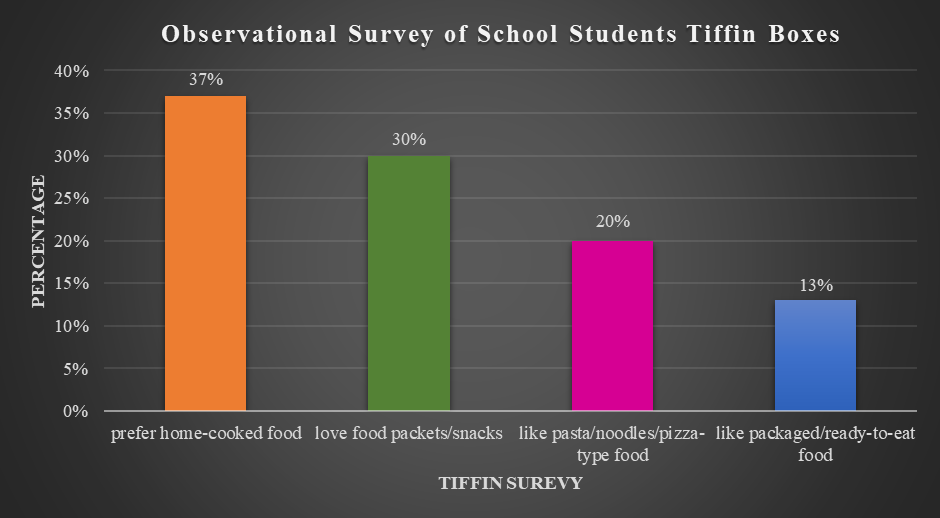
A total of 400 students from different schools were surveyed to assess their preferences for home-cooked, processed, and ready-to-eat foods. The results revealed that 37% of students preferred home-cooked food, indicating a positive trend toward healthy eating habits (Figure: 1). However, 30% of students were found to love food packets and snacks, while 20% preferred pasta, noodles, or pizza-type foods. A smaller proportion, 13%, brought packaged or ready-to-eat food items. Although a majority of students still brings traditional home-cooked meals, a considerable number showed a growing inclination toward convenience and processed foods. This trend highlights the influence of modern lifestyle and food marketing on young consumers. The findings emphasize the need for greater awareness among parents and students regarding the importance of balanced nutrition and the health risks associated with excessive consumption of packaged foods. CERC, through its Marico Eat Right Campaign, recommends continuous awareness programs and school-based interventions to promote healthier food choices and ensure the well-being of students.
Observational survey of college students in Ahmedabad
Conducted by: CERC – Marico Eat Right Campaign
Location: College Students, Ahmedabad
Sample Size: 102 students
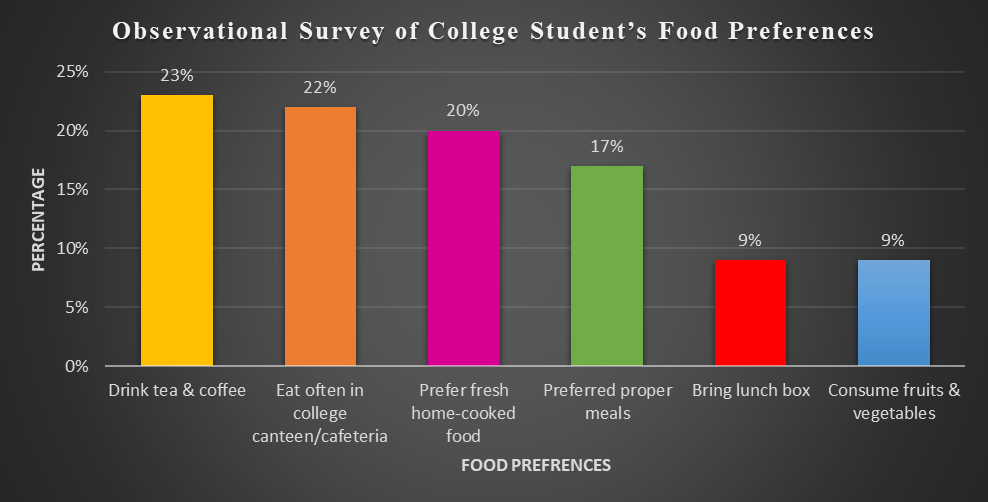
A total of 102 students participated in the survey, which aimed to analyze their inclination toward home-cooked food, canteen meals, beverages, and healthy dietary choices. The results showed that 23% of students preferred drinking tea and coffee regularly, indicating a high dependence on caffeinated beverages (Figure: 2). About 22% of students were found to eat frequently in their college canteen or cafeteria, reflecting the convenience-driven lifestyle of urban youth. Meanwhile, 20% preferred fresh home-cooked food, while 17% opted for proper meals during the day. Only 9% of students carried lunch boxes from home, and an equal 9% reported regular consumption of fruits and vegetables. The findings highlight a shift in dietary patterns among college students, with a tendency toward convenience and quick food options rather than balanced, home-cooked meals. This trend suggests a need for increased awareness regarding the importance of nutritious eating habits and the long-term benefits of incorporating fruits, vegetables, and freshly prepared meals into daily diets.
Observational Survey of Hostel Student’s Food Preferences
Conducted by: CERC – Marico Eat Right Campaign
Location: Hostel Students, Ahmedabad
Sample Size: 50 students
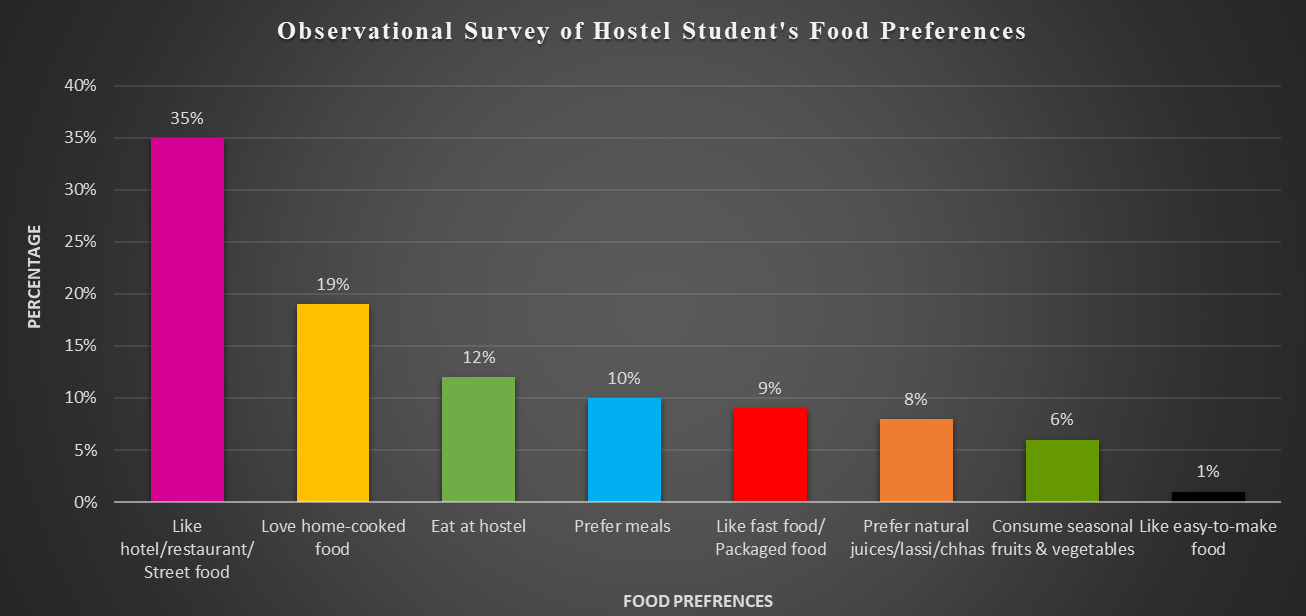
A total of 50 students participated in the survey. The results revealed that 35% of hostel students preferred eating hotel, restaurant, or street food, indicating a strong inclination toward easily available and flavourful options outside the hostel premises (Figure: 3). Around 19% of students expressed a preference for home-cooked food, reflecting a desire for familiar and nutritious meals despite living away from home. About 12% regularly ate at their hostel mess, while 10% preferred proper meal patterns. Fast food and packaged food were liked by 9% of respondents, showing the growing influence of convenience foods. Meanwhile, 8% preferred natural beverages such as juices, lassi, or chhas, and 6% reported consuming seasonal fruits and vegetables. Only 1% of students opted for easy-to-make food items. The findings suggest that hostel students are more inclined toward restaurant and fast-food options compared to healthier choices, largely due to convenience, limited access to home-cooked meals, and peer influences. The study underscores the need for promoting nutritional awareness and encouraging hostel managements to provide balanced and hygienic meal options to improve students’ dietary health and well-being.
Findings
The results revealed a mixed picture while a significant number of students still carry traditional, home-cooked meals, an increasing proportion prefer packaged, processed, or convenience-based foods. This reflects both changing lifestyle patterns and marketing influences on young consumers eating behaviour.
Nutritional Balance in Tiffin Boxes
Across all surveyed groups, the presence of core meal items like roti, sabzi, rice, dal, or sandwiches was observed in more than half of the lunchboxes. However, only a small fraction included fruits, vegetables, or dairy products essential for a balanced diet.
- School students (37%) carried mainly home-cooked food, but only a few included fruits or dairy items.
- College students (20%) preferred home meals, but reliance on caffeinated beverages (23%) and canteen food (22%) reduced the nutritional balance.
- Hostel students (19%) showed the least inclusion of healthy components, often replacing balanced meals with street or restaurant food (35%).
These findings indicate a gap in meeting nutritional guidelines, where meals often lack sufficient fruits, vegetables, and protein sources.
Prevalence of Unhealthy and Processed Food
A major concern emerging from the survey is the high frequency of processed and ready to eat foods.
- Around 30% of school students brought food packets or snacks.
- College and hostel students showed a strong dependence on processed or convenience food items like noodles, chips, or packaged drinks. This pattern aligns with global trends in youth dietary behaviour, where convenience and taste often outweigh nutritional considerations.
Beverage Choices
The type of beverages carried by students reflected an increasing preference for tea, coffee, and sweetened drinks rather than water, milk, or natural beverages.
- In colleges, 23% consumed tea or coffee regularly, indicating a dependence on caffeine.
- Only 8% of hostel students preferred natural drinks such as lassi or chhas, while sugary beverages were found in several lunchboxes. This pattern underscores the need for awareness regarding hydration and the negative health impacts of high-sugar beverages.
Factors Influencing Food Choices
Through student feedback and observational analysis, the following key factors were identified as influencing lunchbox contents:
- Time constraints faced by parents and students.
- Food spoilage concerns, especially in hot weather conditions.
- Peer influence and taste preferences favouring fast foods.
- Lack of awareness regarding balanced diet requirements. These insights emphasize the importance of practical, easy-to-follow nutrition education for both parents and students.
Identification of Gaps and Barriers
The survey revealed consistent nutritional gaps across all age groups:
- Low intake of fruits, vegetables, and dairy.
- Over-reliance on high-sugar, high-fat, and processed foods.
- Limited understanding of nutritional balance among both students and parents.
Addressing these gaps requires targeted interventions focusing on awareness, behaviour change, and accessibility of healthier alternatives.
Impact and Implications
The study provides a baseline understanding of student’s current food habits and identifies opportunities for improvement through awareness campaigns and school-based interventions.
Key impacts include:
- Enhanced academic performance: Nutritious lunches contribute to better concentration and learning outcomes.
- Improved long-term health: Promoting healthy eating habits early can reduce the risk of obesity, diabetes, and other chronic diseases.
- Increased nutritional awareness: Both children and parents become more conscious of making healthier food choices.
Conclusion
The Tiffin Box Survey conducted by the Consumer Education and Research Centre (CERC) under the Marico Eat Right Campaign highlights significant insights into the changing food habits of students across schools, colleges, and hostels in Ahmedabad. The findings reveal that while a considerable proportion of students still prefer home-cooked food, there is a growing tendency among young individuals to consume processed, packaged, and convenience-based foods.
School students showed relatively healthier eating habits, with 37% preferring home-cooked meals. However, the increasing consumption of packaged snacks and ready-to-eat foods among them indicates the growing influence of modern marketing and lifestyle changes. College students displayed a noticeable shift toward convenience, relying heavily on canteen food, caffeinated beverages, and quick meals, with only a few maintaining the habit of carrying nutritious tiffin from home. Hostel students showed the most pronounced tilt toward hotel or restaurant food, reflecting both limited access to home-cooked meals and lifestyle-driven preferences.
Overall, the survey emphasizes an emerging nutritional concern that the decline in consumption of freshly prepared, balanced meals and the rising dependence on processed foods. This transition can have long-term implications on students’ health and well-being. Hence, there is an urgent need for continuous awareness and education campaigns promoting healthy dietary habits among students, parents, and educational institutions. CERC recommends school and college-based nutrition programs, inclusion of healthy meal options in canteens and hostels, and sustained community-level interventions under the CERC-Marico Eat Right Campaign to encourage mindful eating and foster a culture of health and wellness among the youth.